


Backdrop Size for Concert Stages That Fits
If your banner shows up two feet too short, the audience never says, “Cool, a minimalist look.” They say nothing - and your set photos look like you borrowed someone else’s stage.
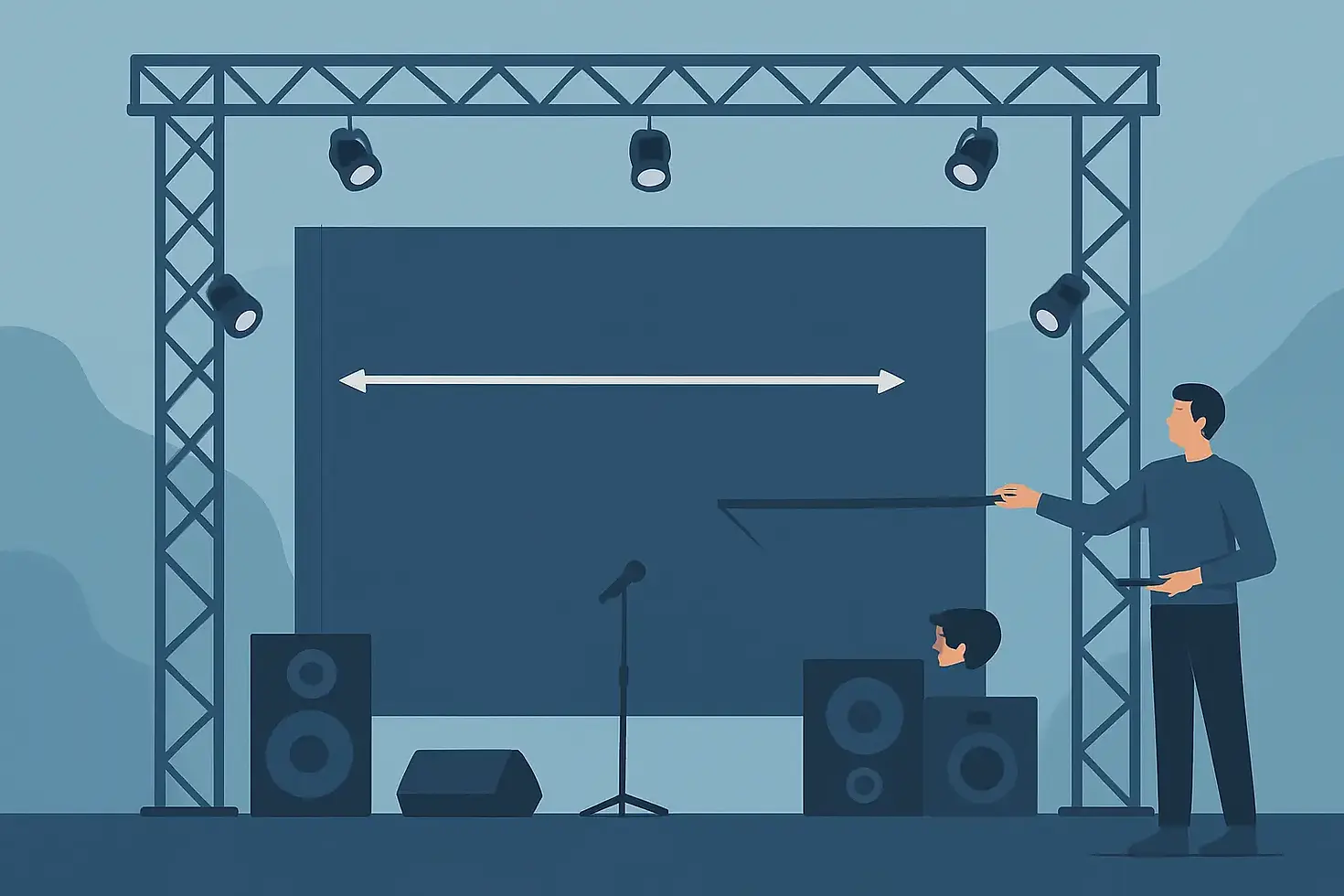
Getting the backdrop size for concert stage right is less about picking a random “standard” and more about matching three realities: the room’s trim height, the stage width you actually get once PA and drape eat into it, and what you need the backdrop to do (branding, mood, content, or all three). Here’s how to choose a size that looks intentional in the pit, reads on a phone, and doesn’t become a rigging problem at load-in.
Start with what the venue can actually give you
Most stage backdrop mistakes happen because bands plan off the venue’s posted stage dimensions. Those are almost always the deck size, not the usable backdrop area.
Usable width is typically stage width minus the space taken by side drape, stacks, subs, lighting towers, video walls, or sponsor signage. Usable height is trim height minus the lowest obstruction - truss, house pipe, LEDs, or soft goods.
Before you lock art or print, ask for two numbers: “What’s the hanging width behind the kit?” and “What’s the max trim height upstage?” If you can’t get an advance, plan for flexibility with grommet placement and a little extra bleed in your design so you can cheat the crop without ruining the composition.
The trim-height reality check
A lot of clubs can technically hang something 12-14 feet high, but the best-looking zone may be 8-10 feet because of lights, HVAC, or low pipes. Theaters often give you more height but also more rules. Festivals can give you a massive upstage wall - or a very specific footprint because of flown LED and sponsor packages.
That’s why “taller is better” is only true when the room can support it and your artwork is built for it.
Common stage types and sizes that actually work
There’s no single correct answer for backdrop size for concert stage setups, but there are repeatable ranges that fit how US venues are built.
Clubs and small rooms
In the club world, you’re often dealing with 16-24 feet of usable width and 8-12 feet of usable height.
A 10x8 or 12x8 backdrop can look clean behind a drum kit and still leave space for lights and house pipes. If your stage is wider, 15x10 can read bigger without becoming a sail in a low-ceiling room.
The trade-off: if you go too wide in clubs, you end up wrapping into side drape or covering venue branding, which can get you a “please take that down” mid-changeover.
Theaters and mid-size venues
Theaters are where full-width backdrops start to shine. Usable widths of 24-40 feet and heights of 12-20 feet are common, depending on proscenium and rigging.
A 20x12, 24x14, or 30x15 tends to fill the frame in photos and create a real “touring” look. If you’re carrying floor package lighting or have a riser, leaning taller (while staying riggable) often looks premium.
The trade-off: bigger backdrops demand better rigging discipline. If you don’t have enough points, if the pipe bows, or if your grommets are spaced wrong, the whole thing can look wavy and tired.
Festivals and outdoor stages
Outdoor stages can swallow banners. You’re competing with open sky, massive truss, and LED.
If you’re doing a single branded backdrop upstage, 30-40 feet wide is common on larger festival stages, with heights ranging 15-25 feet depending on what’s already flown and how far upstage you can live.
The trade-off: wind. Outdoors, oversized fabric without proper tension and safe rigging can turn into a liability. If the festival PM says no full sail, listen. Sometimes the right move is a smaller backdrop plus side scrims, or a design that still reads when it’s not stretched wall-to-wall.
Choose your size based on what you need it to do
A backdrop is doing work. Decide which job matters most, then size and design around that.
If the goal is clean branding in every photo, you want the logo to sit high enough to clear amps and heads and wide enough to frame the drummer. That usually means the backdrop should be wider than the drum riser and tall enough that the primary mark lands in the top third.
If the goal is atmosphere, you can go bigger with pattern, texture, and color fields - because those still read even when the center gets blocked by cymbals and moving lights.
If the goal is content (like album art), don’t size it so the focal point lands exactly where the kit lives. Build the file with a “safe zone” and assume the center 6-8 feet of height behind the drummer will get visually busy.
Don’t forget bleed, safe area, and “blocked by the band” math
Backdrop art fails when it’s designed like a flyer.
Plan for bleed on all sides so you can hang it a little high, a little low, or slightly pinched without cutting off critical elements. Then build a safe area inside that where the logo and type live.
Also, do the blocking math. Between the drum kit, backline, and bodies, the most obstructed part of your backdrop is typically the lower half and the center. If your logo sits at chest height on the file, it’ll be a partial logo in half your photos.
A simple rule that holds up: treat the bottom 3-5 feet as “visual noise,” then design your hero elements above it.
Materials and finishing can change what sizes are realistic
Two backdrops can be the same dimensions and behave completely differently.
A heavier, blockout-style fabric hangs flatter and reads more premium under backlight, but it can weigh more and needs better support. A lighter fabric is easier to tour and quicker to fly, but it can show wrinkles, light leaks, or movement if it isn’t tensioned well.
Finishing matters just as much as size. A pole pocket can look incredibly clean in a theater with a pipe and drape system, but it’s not always compatible with quick club hangs. Grommets are flexible, but spacing and reinforcement matter if you want a tight, professional look.
If you’re planning a larger format, build the finishing for real rigging, not wishful thinking.
Rigging and load-in speed: the part that saves your night
A perfect size on paper can still be wrong if it’s slow to install.
In fast changeovers, you want a backdrop that can go up in minutes with predictable attachment points. That means thinking about where you’ll actually clip it, how you’ll keep it from sagging, and how you’ll prevent the bottom corners from curling.
If you’re touring without a dedicated stage crew, favor a size and finish your band can hang correctly every time. A slightly smaller backdrop that goes up clean will outperform a massive one that hangs crooked.
What to ask for when you’re advancing a show
When you’re trying to lock the right concert stage backdrop size across a run, you don’t need a novel from the venue. You need a few specific answers.
Ask for the upstage hanging width, max trim height, and what’s already occupying that space (truss, LED, curtain). Confirm whether you’re allowed to hang from the house pipe or if you need your own stand. Then ask if there’s a preference for grommets vs pole pocket.
If you’re doing festivals, ask where your banner can live relative to sponsor signage and whether wind restrictions apply. That single question can save you a reprint.
One size for a whole tour vs a size per market
A single backdrop for every room is the dream - simple, consistent, fast. It’s also a compromise.
If you’re mainly playing clubs, a mid-size backdrop that fits 80 percent of rooms is usually the right call. If you’re stepping between theaters and festivals, you may want two sizes: a “headline” piece for bigger stages and a “daily driver” for tighter hangs.
The cost of a second size can be real, but so is the value of having photos that look like the same project night after night.
Make the backdrop part of the full brand system
A backdrop looks best when it matches the rest of your world: merch graphics, color palette, type, and online visuals. When those elements align, even a modest-size backdrop looks expensive.
That’s the reason a lot of teams choose an all-in-one partner: fewer handoffs, fewer mismatched files, fewer surprises at print time. If you want design-to-production support that’s built for touring timelines, AllYourBandNeeds handles stage backdrops alongside merch and the operational pieces that keep momentum going.
If you’re deciding your next backdrop size, aim for the option that you can hang clean, light well, and trust in every room - because the best branding on stage is the kind you never have to apologize for at load-in.


Concert stage backdrops work best when the size matches the stage, lighting and audience distance. A clean backdrop, clear visuals and good stage flow can make live performances look more professional. A well-planned sahne kiralama setup can help concerts and live events look stronger, cleaner and more memorable.